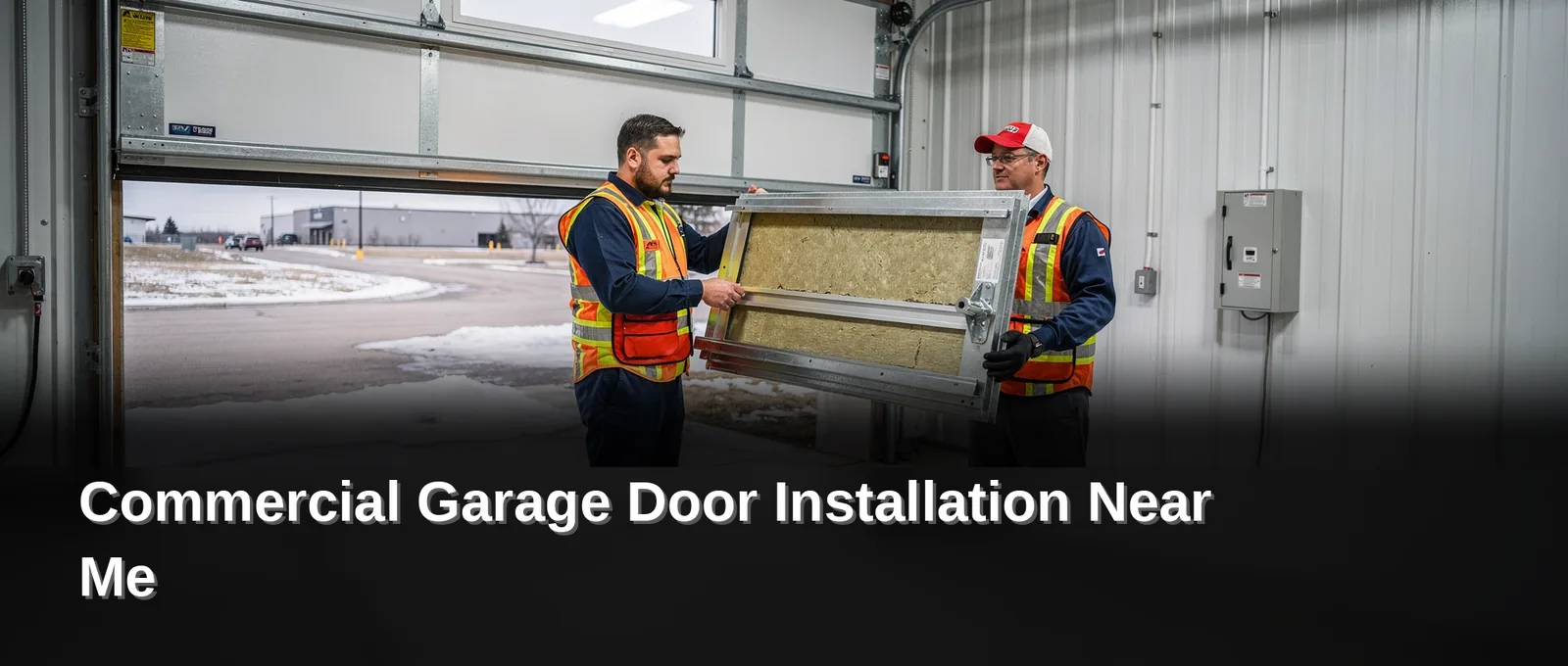
Commercial garage door installation in Omaha requires a professional contractor experienced in heavy-duty systems. Pyramid Contractors provides honest assessments and clear pricing for commercial properties. The company evaluates existing conditions and installation requirements before recommending solutions, with labor backed by a solid craftsmanship warranty for lasting performance.
Key Takeaways
- Professional installation of heavy-duty commercial systems demands an experienced contractor.
- Higher R-values mean better thermal insulation for Omaha commercial facilities against Nebraska winters.
- Wind load rating must match the building’s exposure and door dimensions to survive Nebraska storms.
- Automatic reversal mechanisms, photoelectric sensors, and emergency release mechanisms form the safety backbone of installations.
Why does R-value matter for Omaha commercial doors?
R-value measures a door’s resistance to heat flow. Higher R-values mean better thermal insulation for Omaha commercial facilities. Nebraska winters punish under-insulated buildings with soaring energy bills and uncomfortable interior conditions. Warehouse operators and facility managers face real financial losses when heated air escapes through poorly insulated overhead doors.
Commercial garage door installation near me searches often overlook this critical specification. The wrong R-value creates a permanent drain on operational budgets.
How does Nebraska weather affect commercial door performance?
Years of exposure to Nebraska weather degrades door components and compromises thermal seals. Previous repairs, perimeter sealing, and panel condition all influence whether a door maintains its insulating properties or requires complete replacement. Omaha’s freeze-thaw cycles accelerate this deterioration.
What happens when commercial doors lack proper sealing?
Professional installation determines whether insulation performs as specified. Proper measurements, preparation, and sealing prevent drafts and moisture intrusion. A door with excellent R-value ratings still fails if gaps around the perimeter allow air exchange. The installation quality directly controls operational comfort.
A well-insulated commercial door improves overall building comfort and energy efficiency. Facility operations benefit from stable interior temperatures. Appearance and function both depend on getting the thermal barrier right from day one. Pyramid Contractors evaluates these factors during every commercial assessment.

How does wind load affect door selection?
Wind load determines whether a commercial garage door survives a Nebraska storm or collapses inward. Facility managers in Omaha face real risk from high winds and hail that turn an under-rated door into a structural liability. The door’s wind load rating must match the building’s exposure and the door’s dimensions.
A door that fails under wind pressure endangers inventory, vehicles, and personnel. The damage extends beyond the door itself when wind breaches the opening and pressurizes the building interior.
What wind load rating does a commercial door need in Omaha?
Local conditions demand doors rated for the specific wind zone. Nebraska weather includes high winds and hail, so commercial garage doors must carry a wind load rating sufficient to withstand storms without failure. A professional evaluation of the property’s exposure and door size determines the required rating for safe operation.
How does wind-rated installation differ from standard installation?
The difference lies in the reinforcement. Proper installation of wind-load-rated doors includes reinforced tracks and bracing to meet local building codes. Standard tracks and fasteners cannot hold against the uplift and lateral forces that high winds generate. Pyramid Contractors evaluates the opening, the surrounding structure, and the door specifications before recommending the correct bracing configuration. Skipping this step leaves the door vulnerable even when the panel itself carries an adequate rating.
What safety standards apply to commercial installations?
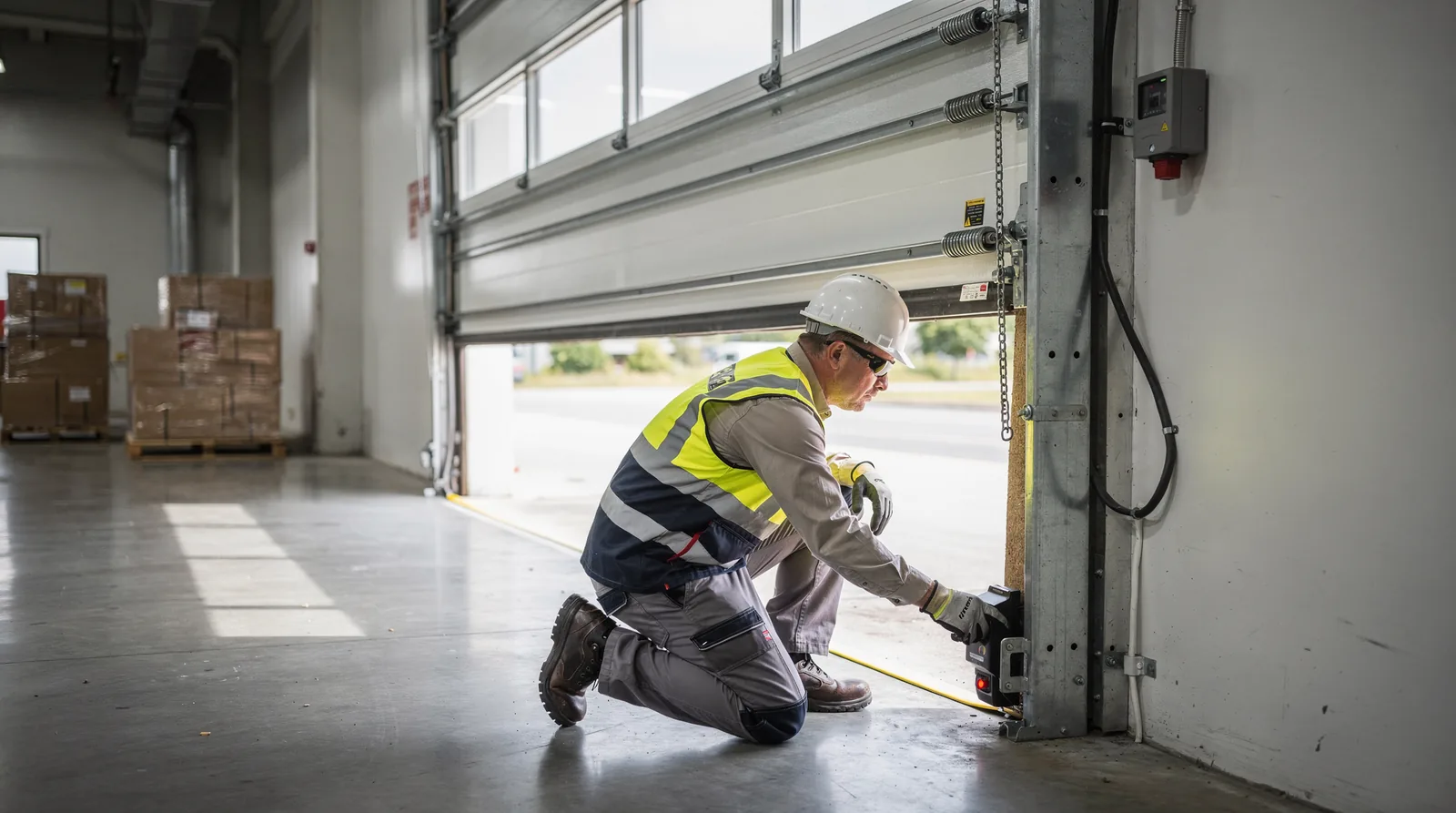
Commercial garage door installations in Omaha must meet strict safety requirements for automatic reversal systems, photoelectric sensors, and emergency release mechanisms. These standards protect warehouse staff, delivery personnel, and equipment from serious injury or costly property damage. Skilled, experienced technicians ensure every safety feature is tested and functioning before the door enters service.
What safety features does a commercial door require?
Three core systems form the safety backbone of any commercial garage door installation near me in Omaha. Automatic reversal mechanisms stop and reverse a closing door when resistance is detected. Photoelectric sensors project an invisible beam across the door opening; breaking that beam triggers an immediate reversal. Emergency release mechanisms allow manual operation during power failures or system malfunctions.
How often should commercial door safety systems be inspected?
Regular maintenance keeps safety compliance intact over the life of the door system. Technicians inspect reversal sensitivity, sensor alignment, and release functionality during scheduled service visits. A single malfunctioning sensor exposes a facility to liability and operational downtime. Professional service providers offer repair, maintenance, and installation for all types of commercial overhead doors and openers. Consistent inspections catch wear before it becomes a safety failure.
FAQ
Why does R-value matter for Omaha commercial doors?
R-value directly impacts energy costs and comfort in Omaha commercial facilities. Higher ratings provide better thermal insulation against Nebraska winters, preventing soaring energy bills and uncomfortable interior conditions.
How does wind load affect door selection?
Wind load rating is critical for commercial door survival during Nebraska storms. The rating must match the building’s exposure and door dimensions to prevent collapse.
What warranty does Pyramid Contractors offer on commercial garage door installation?
Pyramid Contractors provides comprehensive warranty coverage on workmanship for lasting performance.
Conclusion
Choosing the right commercial garage door for an Omaha facility requires balancing insulation, wind resistance, and safety features against the demands of Nebraska weather. A professional evaluation of these factors determines whether the installation delivers lasting performance or creates ongoing operational problems. Facility managers who prioritize proper specifications and professional installation protect their buildings, their budgets, and their personnel from preventable failures.